“Choo Choo Customs El Caminos” – The “El Camino SS”:
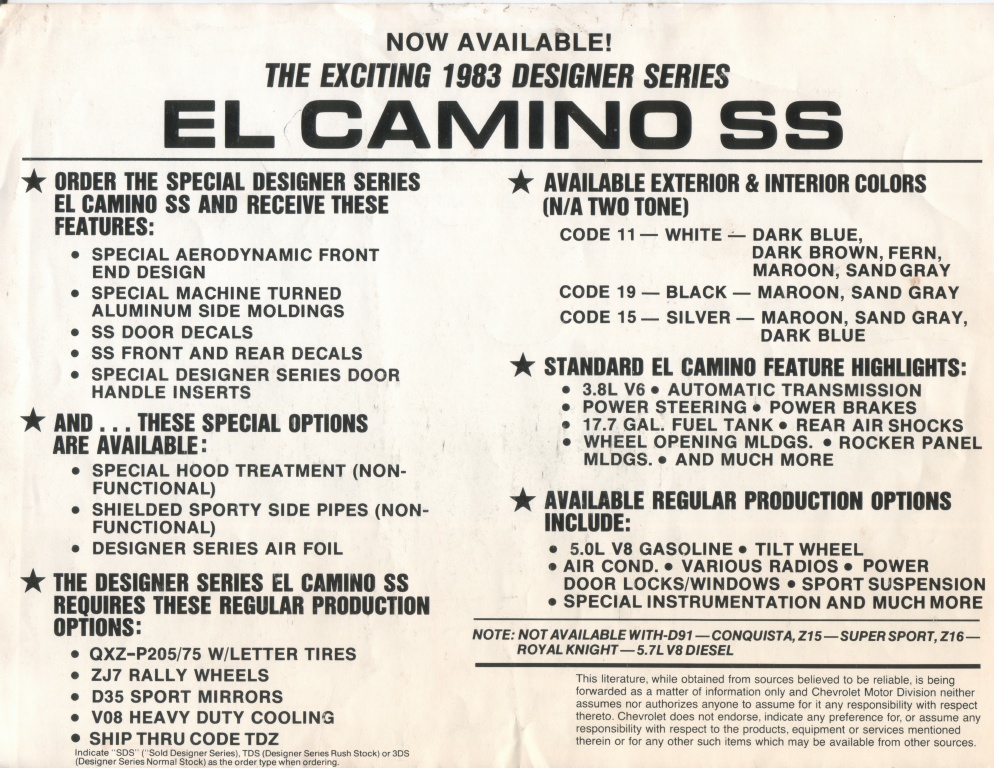
GM offered a special package-version of an “SS” that was dubbed the “Designer Series”, which was introduced around the middle of 1983.
Starting in 1984, they essentially ended what was traditionally known as the “Super Sport” package by renaming it as the “SS Sport Décor Package” (RPO Z15). However, they did not rename the RPO code descriptor, which still read as “Super Sport” in most coding-related documentation.
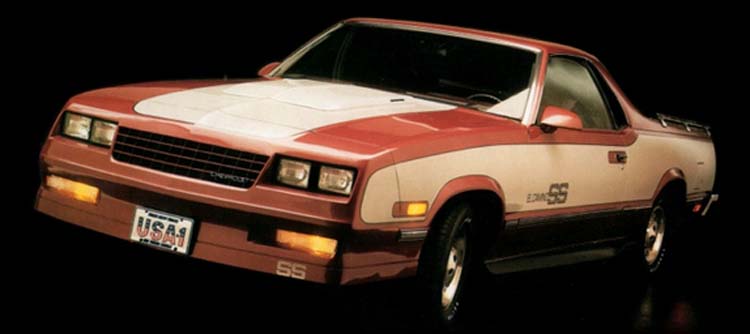
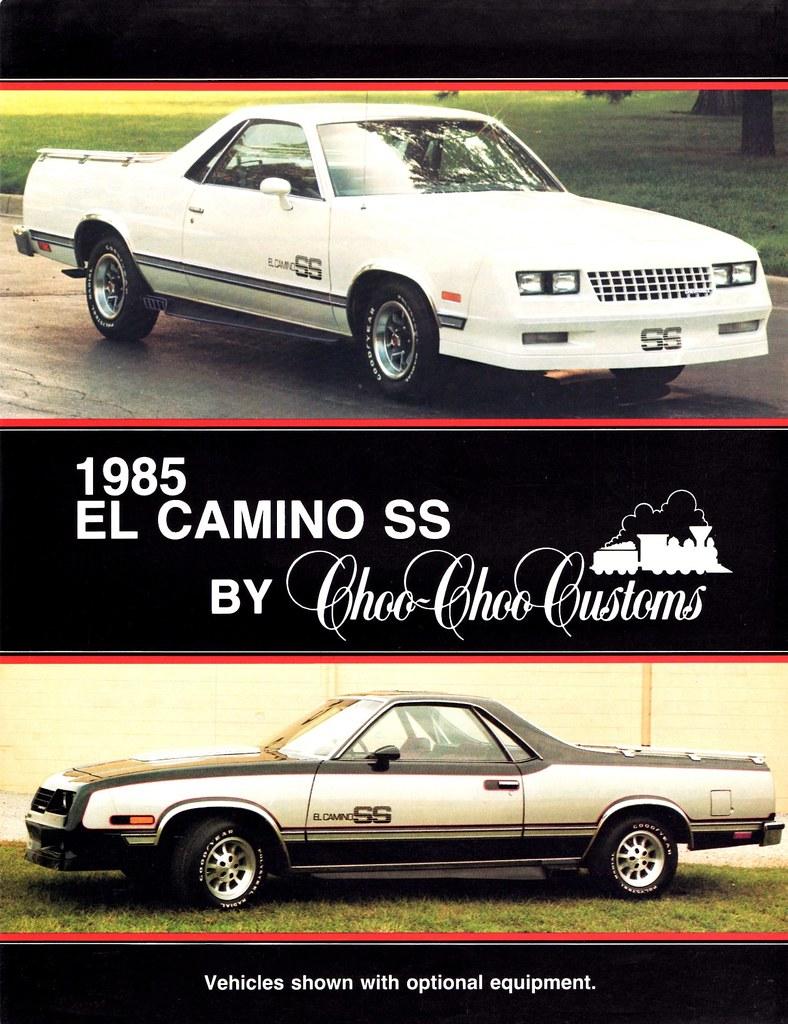
They then added the option to the lineup what is commonly referred to as the “Choo Choo” conversion, officially marketed as the new “El Camino SS”. There were basically two “SS” versions available in tandem from that point on until the El Camino was discontinued in 1987.
The introduction of this appearance package design essentially coincided with the introduction of the aerodynamic Super Sport Nose styling that was present on the Monte Carlo SS and was introduced for use on the NASCAR racing circuit about the same timeframe.
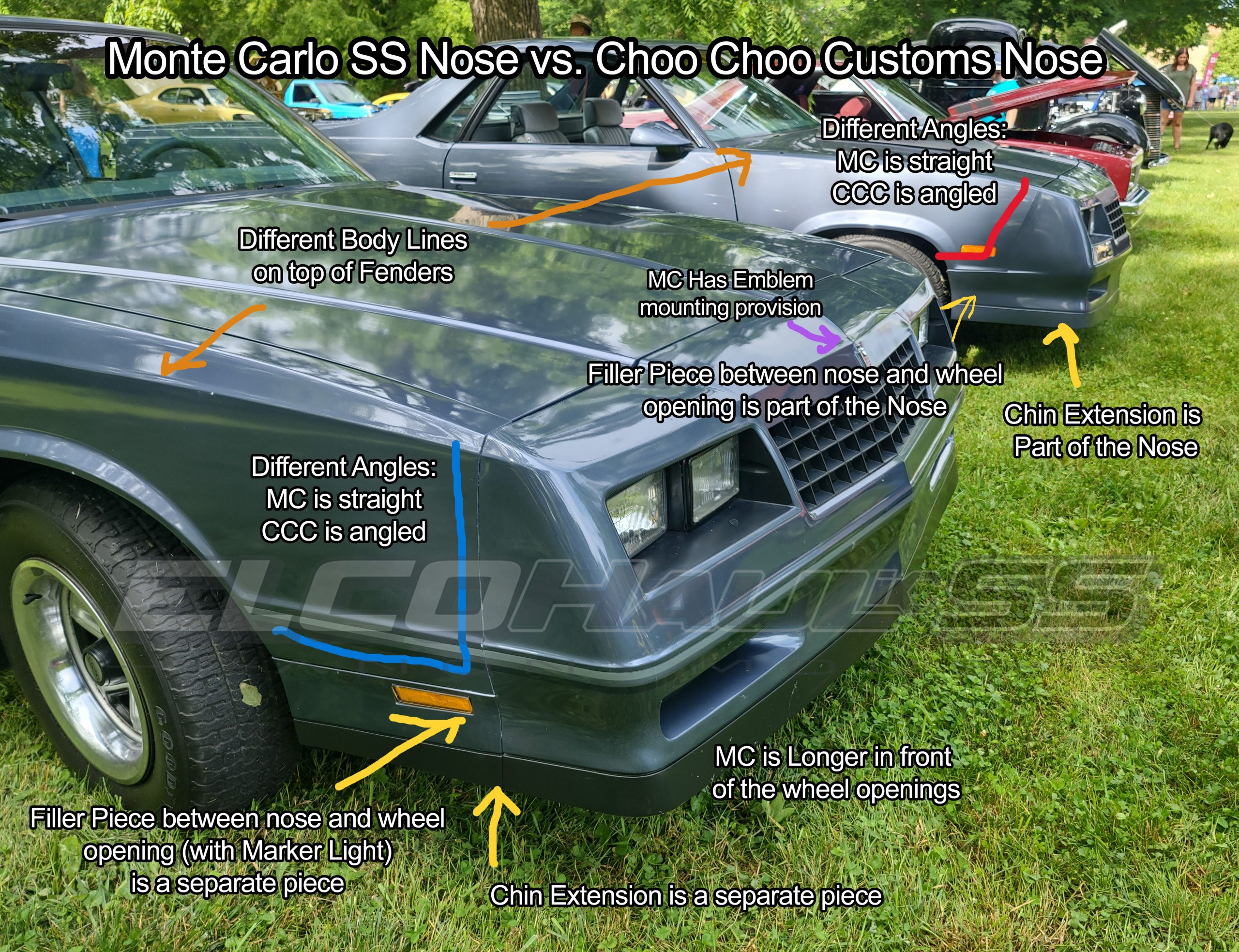
The nose assemblies appear to be almost identical and are often times referred to as the “Monte SS Nose”, but are actually rather different in construction, and are not interchangeable between the models. Yes, you can swap the entire dog house and doors, but that’s well beyond being “interchangeable”.
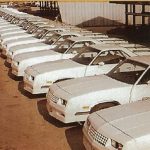
These vehicles were either shipped directly from the manufacturing plants to Chattanooga for conversion as they were ordered, GM pre-sent batches, or “pools” of them to be converted and sold from, or they were sent for conversion from a selling dealer’s inventory prior to final sale.
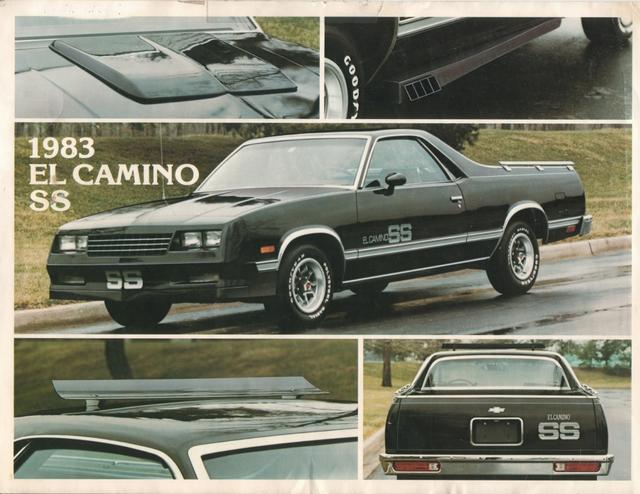
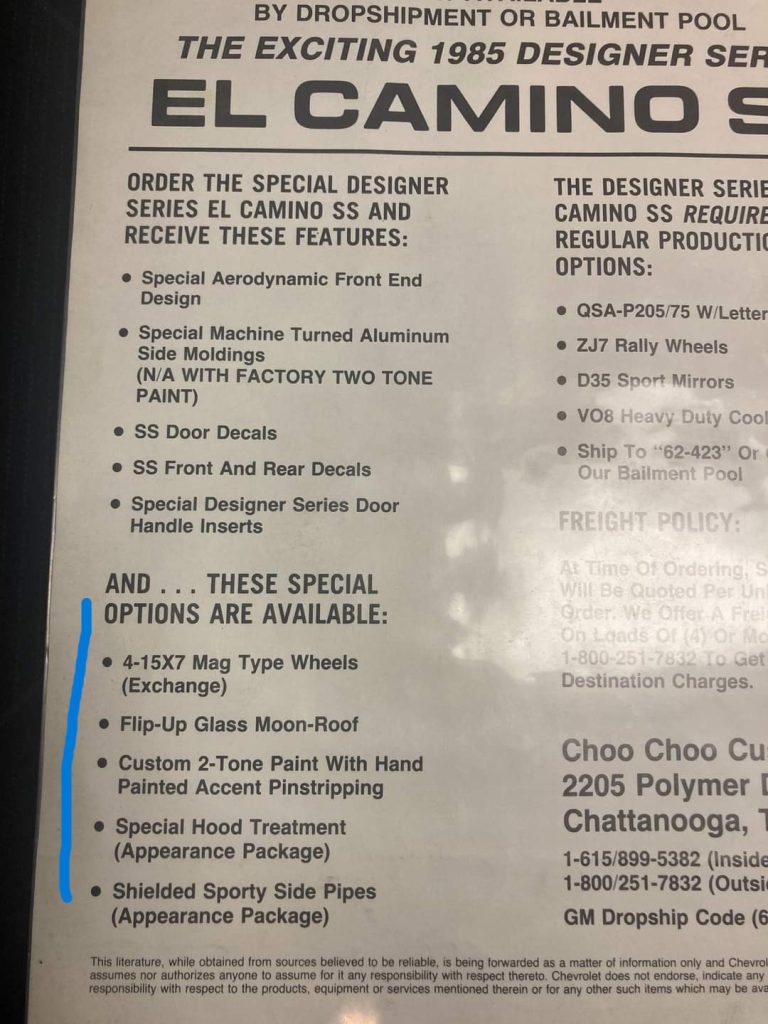
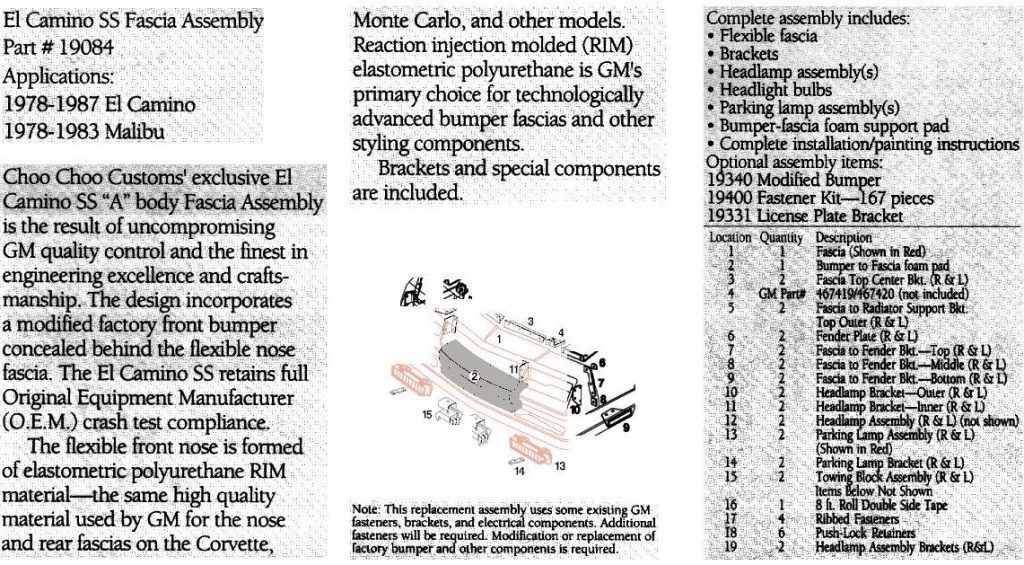
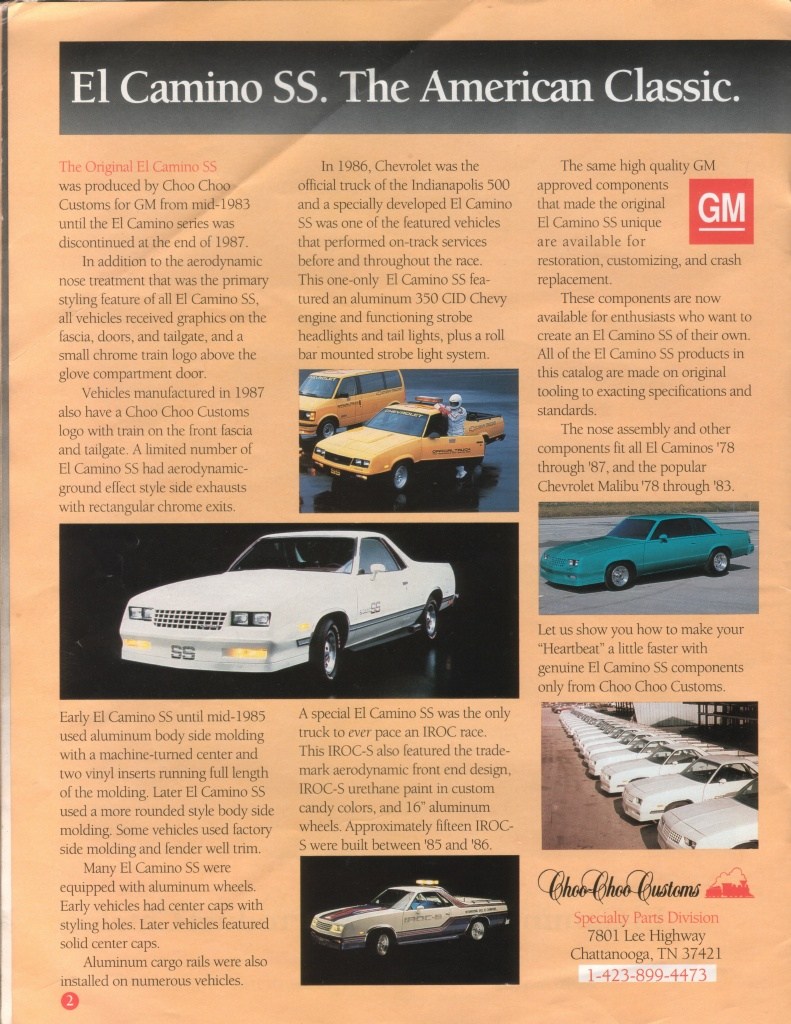
The custom pieces for the “El Camino SS” package primarily consisted of the urethane nose, a Choo Choo Train emblem on the dash, “Designer Series” door handle inserts, and unique “El Camino SS” nose, door, and tailgate decals.
The first couple of years had special, machine-turned aluminum side moldings but were later phased out during, or after the ’85 model year, and were typically replaced with the Conquista-type (RPO BX8) moldings as an option if side moldings were desired.
There were additional options that could be added to the package such as a bolt-on hood scoop, side skirts with “faux” exhaust tips, and on the later years, aluminum mag-type wheels (Western Bullet 15″x7″) a flip-up moon roof, and steering wheel. The “Roof Air Foil” appears to only have been offered initially on the ’83 versions. The “Designer Series” badges were also sometimes found on the sides of the optional bolt-on hood scoop.
The conversion items were manufactured for, and installed by a van conversion company in Chattanooga, Tennessee called Choo Choo Customs.
The Urethane Nose for the El Camino is very physically different due to the mounting interface with the Fenders. It’s a bit more shallow across the top above the Grille, overall shorter, and the mounting flanges to the Fenders are angled as opposed to the MC’s which are straight vertical.
A Monte SS nose and fenders on an El Camino does not a Choo Choo make!
They do however use common lighting hardware parts. The Headlight Bucket Carrier Brackets are Monte Carlo SS but the outboard ends have been trimmed to fit the curvature of the nose, and they use the same Turn Signal/Marker Lamp Housings as the MCSS.
One rather interesting, and often overlooked piece of information appeared while looking all of this stuff up. It seems that the vast majority of the Choo-Choo Customs special “Designer Series SS” models, are NOT ACTUALLY Super Sports…at least technically-speaking. Not as defined by the Regular Production Option Codes used by Chevrolet to designate the Super Sport models. According to their documentation, they essentially started off only converted “Standard” El Camino models.
(Reference the separate article on the “Super Sport” Package, RPO Z15 for more information).
The Package information provided by Choo-Choo Customs in 1983 clearly, and specifically states: “NOT AVAILABLE with D91 – Conquista, Z15 – SUPER SPORT, Z16 – ROYAL KNIGHT, or 5.7L Diesel”.
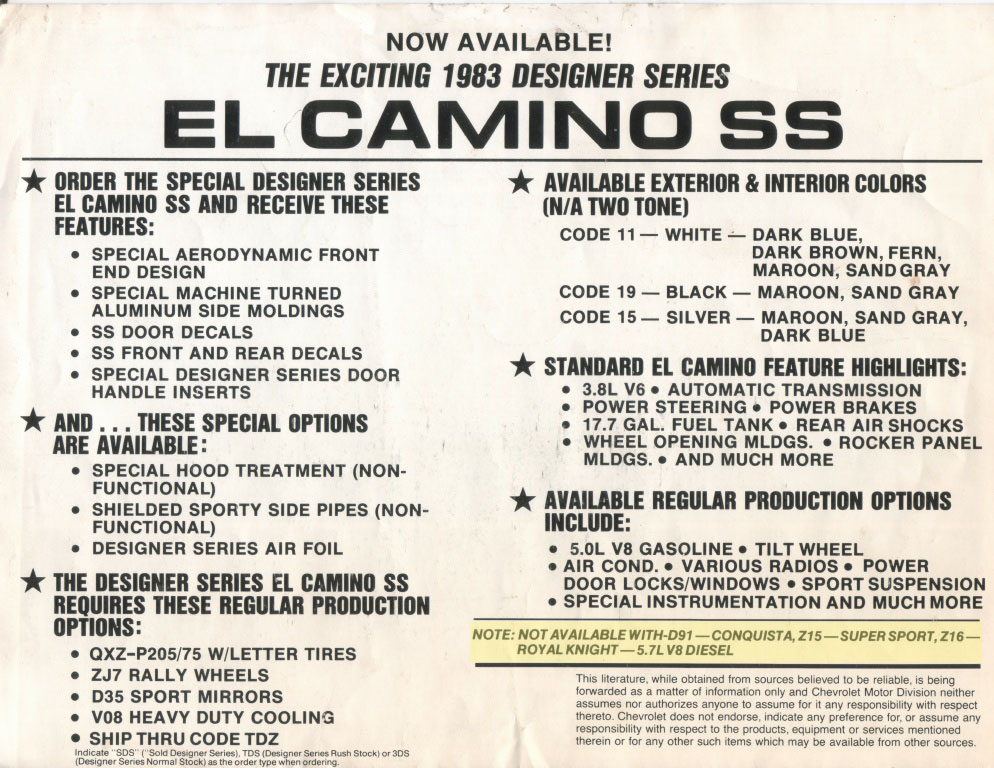
Certainly, this looks to have changed with later years as this was stated during, or shortly after their introduction as shown here. This limitation requirements statement was removed on the 1985 version of this document. But, just technically-speaking, it eliminates the majority of them from being actual “true” SS’s. There are indeed a handful of Z15’s Choo-Choo’s reported to be out there, but it seems to be limited mainly to the last couple of years of conversions ’86 & ’87.
Being that the Choo-Choo SS was not subject to the few restrictions that went along with equipping the Z15 RPO Code “SS” package, that helps explain some of the variations seen on the streets:
- They were available with the Bright Rocker Panel Moldings, which explains why it appears that the Sides Skirts are mounted to/below the Rocker Moldings, which can be seen behind the Skirts in most instances they are present.
- They were able to be optioned with either of the two Body Side and Wheel Opening Molding variations:
- The full-length Belt Line/Half-Fender moldings (BX8), as prominently featured on the Conquista models. This RPO could also be ordered independently of the Conquista package (D91).
- Or the “Body Side, Deluxe” Moldings (BW2) that had adhesive plastic pieces that were Black Vinyl and trimmed with Chrome, and the full Wheel Opening Trim (B96). (The first year or two until around mid-’85, were fitted with “Special Machine-Turned Aluminum and Vinyl Side Moldings”, that took the place of the OE Black Plastic ones in most cases.)
- The Quarter Window Moldings were not all Black like the Z15 package mandated.
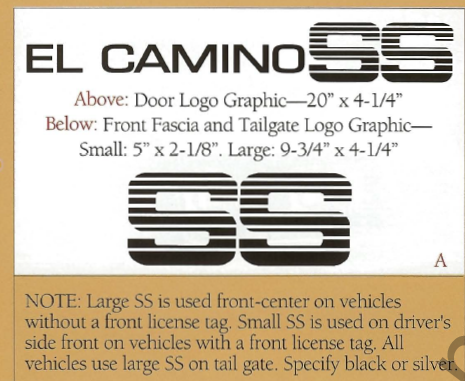
Additionally, the “SS” logo Decal styling used on the Choo-Choo versions, are unique to the “Designer Series” versions. They were not used on any of the Z15 Sport SS Décor “non-Choo Choo” models that came from the factory from ’84-’87, which, according to the sales literature, did not have ANY exterior “SS” designations.
Many folks still choose to display these decals on their non-Choo Choo Caminos as they were commonly available through the CCC catalog and are often reproduced, which is fine of course, just not correct.

“How do I if it’s a real Choo Choo?”
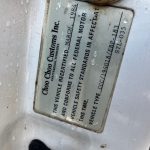
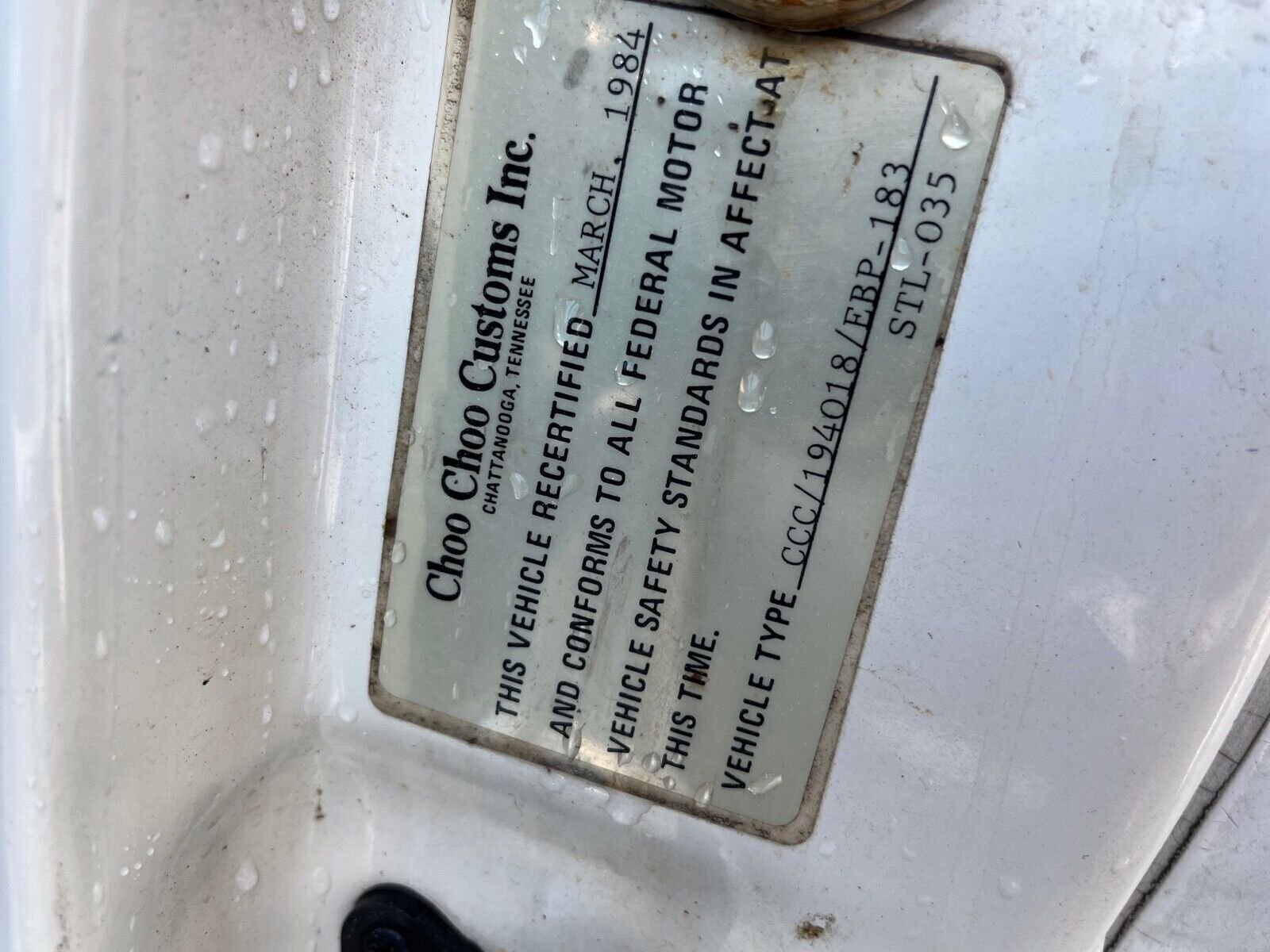
Verifying the authenticity of a “Choo-Choo Designer Series SS” can primarily be accomplished by referencing the FVMSS Recertification Decal in the Driver’s Door Jamb.
However, note that the ’83 models did not have this label.
This label was presumed to be required by the National Highway Transportation Safety Administration due to the alteration of the front of the vehicle from how it was originally manufactured and safety-tested, and any possible effects it would have with front impact safety standards, which required the recertification.

The Recertification Label shows the Model Year, the Sequence Number of the Recertification, and the VIN Sequence Number, which should obviously match the VIN of the vehicle.
Many of the conversions have two letters at the end of the line, which are presumably the initials of the Choo Choo Customs technician that performed the conversions.
One important note when verifying is to also look for the word “Affect” to be mis-spelled with an “A”. The reproduction labels have been corrected to read “Effect” with an “E”, and can be made to read whatever numbers the label maker wanted it to look like, so buyer beware!
Identifying a 1983: (*No Recertification Tags on 1983’s*)
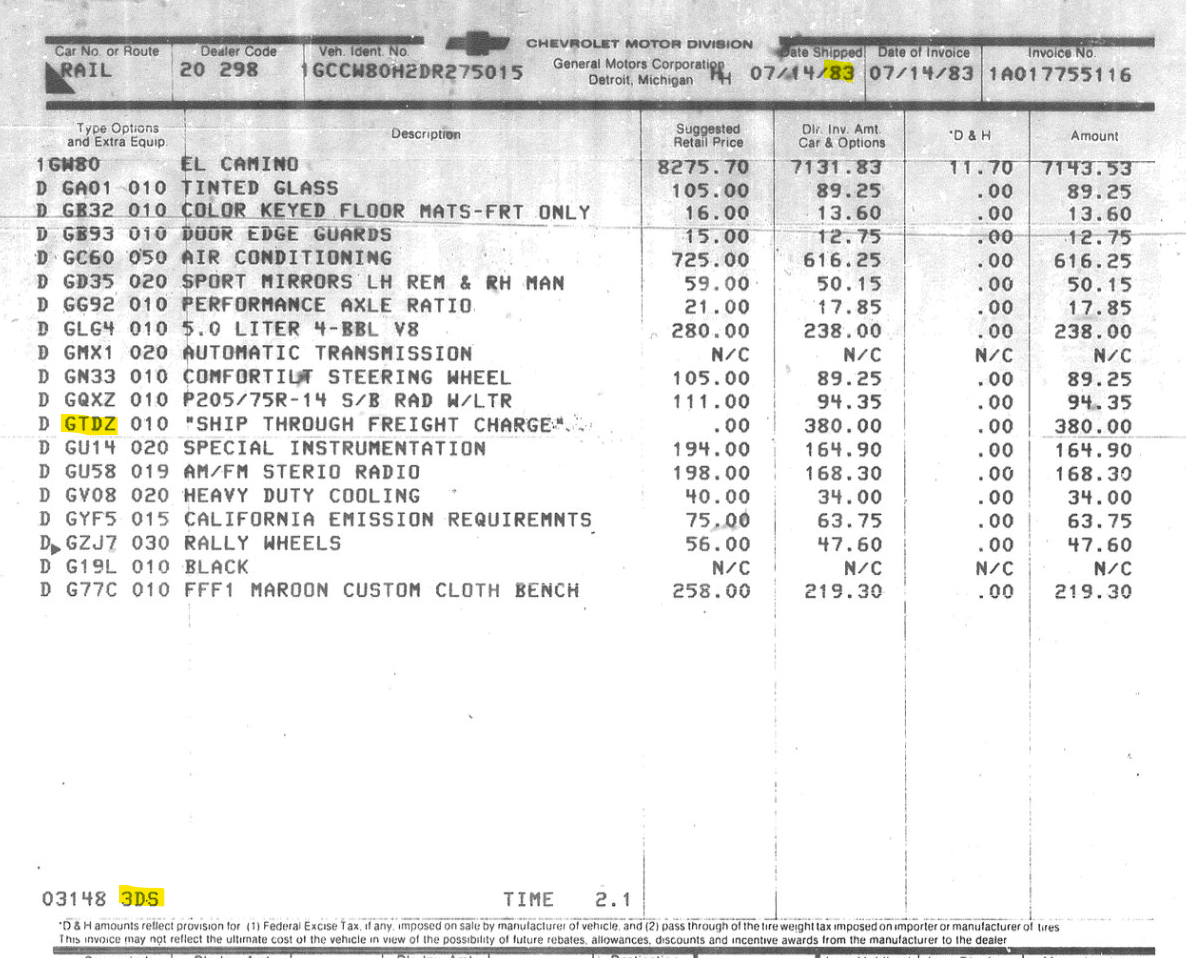
Basically, about the only way to verify a 1983 is by a Dealer Sales Invoice copy obtainable from the GM Heritage Center and it is understood that it “should” contain two codes that would confirm it as a Choo Choo conversion.
A TDZ shipping option code in the Options and Extra Equipment Column indicates it went somewhere between the plant and the receiving dealer…that is presumed to be via Choo Choo.
One of three Order Type codes on the invoice at the bottom of the options and above the cost and dealer information.
- SDS for “Sold Designer Series”
- TDS for “Designer Series Rush Stock”
- 3DS for “Designer Series Normal Stock”
Other physical clues that could be used are that they mandated it to be a 305 V8 (LG4), with the Heavy Duty Cooling package (V08), and were one of three original colors: White (11), Black (19), or Silver (15), which the paint codes can be referenced on the Body ID Tag. But none of these cannot guarantee authenticity as they were available options, just that they appear to have been the “typical” outfitting combination on the Choo Choos.
(Reference the separate article on the Decoding the Body ID Tag for more information on available options.)
Recertification Tag Coding ’84-87:
1984: ’84’s and on had these abbreviations in before the CCC number:
- EDS: EL Camino Drop-Shipped
- EGM: El Camino GM
- EBP: El Camino Bailment Pool
- Many ’84s had CHO listed on the build sheet at the end of the other option codes, but was not necessarily a documented GM factory option code.
1985:
- EDS5: El Camino Drop-shipped 1985
- EBP5: El Camino Bailment Pool 1985
1986:
- E6: El Camino 1986
- DE6: Dealer El Camino 1986
1987:
- E7: El Camino 1987
- DE7: Dealer El Camino 1987
EDS: El Camino Drop-Shipped
This abbreviation was only used in late 1984 and 1985. These El Camino’s were drop-shipped from the GM plant in Arlington, TX (’84) or Ramos Azripe, MX (’85) directly to CCC to be converted and recertified after being purchased by a dealer. All the last El Caminos converted by CCC for 1984 and 1985 were EDS since they were shipped to them at a later date.
EGM: El Camino GM
This truck was sent to CCC by GM from the GM plant in Arlington, likely to fulfil a customer’s specific option configuration order. 1984 was the last year they were produced there before moving to Mexico so EGM was dropped after 84.
EBP: El Camino Bailment Pool
These were from a “pool” or inventory of already built El Camino’s sent to CCC to be converted and recertified, likely to pre-fill anticipated sales stock requirements. This abbreviation was only used in 1984 and 1985 and then replaced by E for 1986 (E6) and 1987 (E7). GM would send a large inventory of El Caminos to CCC to be converted, this was the bailment pool. All 120 STL Drive aways were out of the bailment pool.
E: El Camino
These were sent to CCC by GM as part of a bailment “pool” to be converted and recertified. This abbreviation was only used in 1986 (E6) and 1987 (E7)
DE: Dealer El Camino
These trucks were sent to CCC by a dealer not GM. Dealers were able to send their El Caminos to CCC prior to sale to be converted as long as it had the correct options. This abbreviation was only used in 1986 (DE6) and 1987 (DE7)
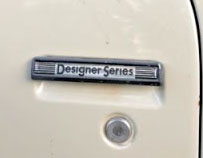
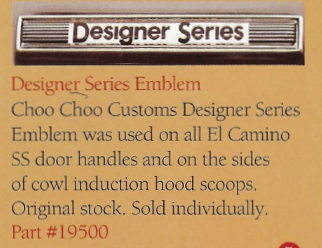
The package items often also used to identify a Choo-Choo SS are the “Special Edition” Door Handle Inserts. They were adhesive Emblems that fit the recesses of the Door Handles. They could and were also commonly added to the sides of the Bolt-On Hood Scoop if requested.
Again, these were commonly available through their catalog and are actually still available at a few reproduction retailers today, so they cannot be used to verify authenticity since they are so easily changed or added.
Also, there was a small “Choo-Choo Customs Train Emblem” that was installed on the Dash above the “El Camino” op “Super Sport” Nameplate on the passenger side Dash Trim Panel. They are a hard to find piece anymore and some have had them stolen at car shows so keep that in mind!
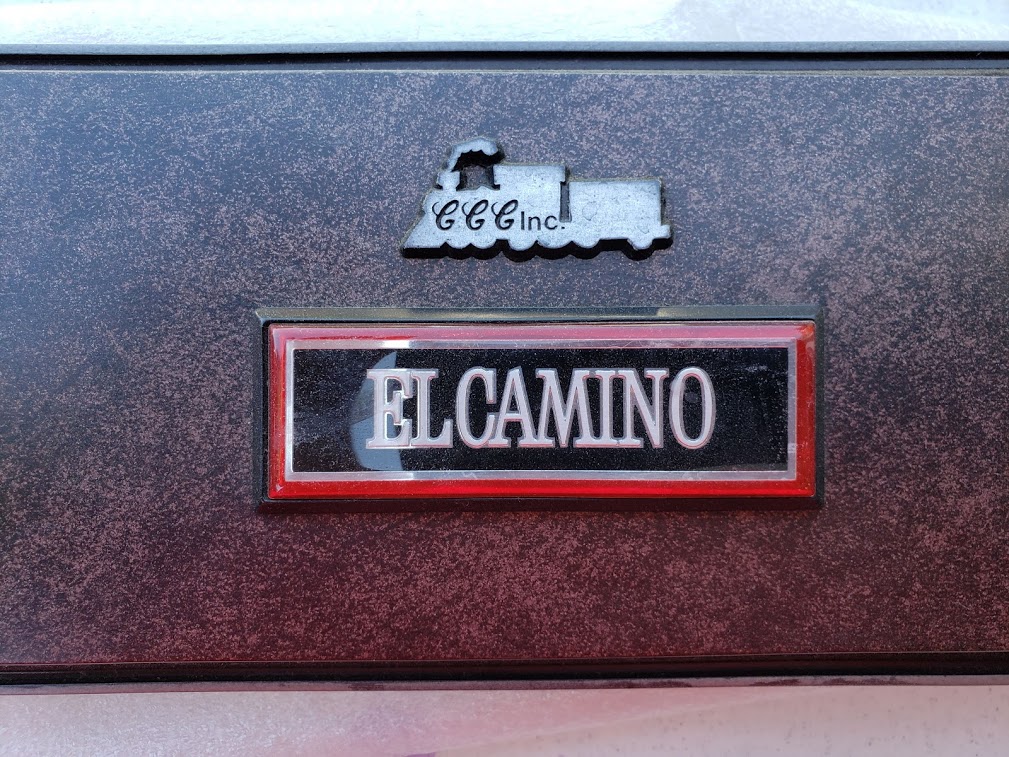
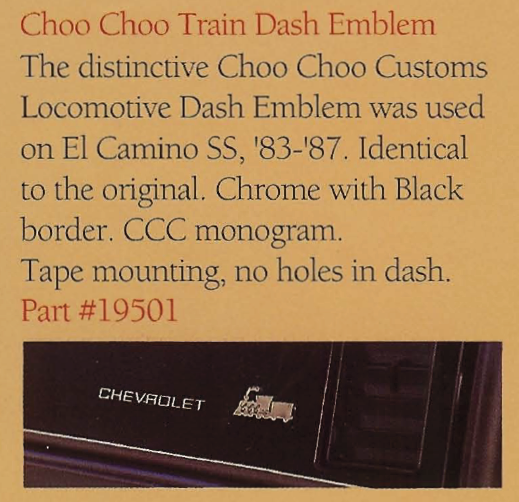
It is very important to keep in mind when attempting to verify authenticity that the Urethane Nose Assembly, the fake Exhaust Side Skirts, the Hood Bulge/Scoop, the Door Handle Inserts, and the CCC Train Dash Emblems, as well as the entire Exterior Decal Package…essentially all of the “bolt-on parts” could all be purchased separately at one period in time directly out of Choo-Choo Custom’s catalog and added to virtually ANY El Camino. These days, the dash train emblems are being 3D printed by some individuals.
Here’s a copy of the Choo Choo Customs El Camino SS Full Line Product Catalog from 1992.
So, an ORIGINAL Recertification Decal is the main key to verification (exc. 1983) OR a copy of the Dealer Sales Invoice from the GM Heritage Center showing it was shipped to Chattanooga for conversion.
Unfortunately, that’s about it. With so many of the items being available through Choo Choo’s catalog for quite some time, there was a lot of opportunity for people to buy the parts and do their own conversions. Honest Charley’s out of Chattanooga took over the rights when Choo Choo went out of business, and offered up a fiberglass version of the Nose Assembly that is still available today by special order…and it’s rather pricey as well!
From an article by Hagerty:
“Founded in 1975 in Chattanooga, Tennessee, Choo Choo Customs turned utilitarian vans into luxurious conversions that made the highway miles soar by. It added second-row captain’s chairs, jazzed-up stereos, and eventually video game consoles to its freeway flyers. Soon, the company also began customizing short-bed pickups, crew-cab dualies, and Suburbans. The Suburbans could be optioned with many of the same amenities as the vans—including deluxe upholstery and high-roof conversions—on their way to becoming some of the ultimate road-trip machines.
SS conversions for El Caminos began in 1983 and lasted until the El Camino left production in 1987. Chevrolet had offered a factory version of the SS, but it looked just like every other El Camino, so the manufacturer contacted Choo Choo Customs to change that.
Choo Choo Customs started with regular El Caminos fitted with rally wheels and sport mirrors and replaced the stock El Camino fascia with a polyurethane nose like the one found on the Monte Carlo SS. Designers slapped decals on the tailgate, doors, and nose and added an emblem to the dash. The El Caminos were sold alongside the similar-styled Monte Carlo SS, although the coupes got a 180-hp, high-output version of the 305-cubic-inch small-block V-8 that was never offered on the El Camino SS.
The U.S. entered a recession in 1990 and van conversion companies suffered greatly. Choo Choo Customs went bankrupt in 1991, though it managed to rebound briefly. In the early 2000s the company went out of business for good and Honest Charley’s Speed Shop, part of the Coker Tire empire, purchased Choo Choo Customs’ remaining stock. The shop continues to offer the SS front-end conversion parts, only now they’re molded in fiberglass.”
Estimated Production figures for Choo-Choo Customs El Camino SS: (*Not Audited):
1983: 587
1984: 1309
(120 of which were “special” St. Louis exclusive dealer release models that also had an “STL-XXX“ number on the Recertification Label).
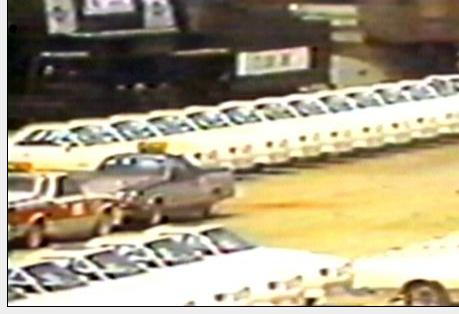
“Additionally, to create excitement for the Choo-Choo Customs edition El Caminos, Chevy hosted the ‘St Louis Dealers El Camino SS Drive away’ event in 1984. 120 brand-new white 1984 Choo-Choo Customs El Caminos that were distinguished by a special tailgate decal, were personally picked up by Chevrolet dealers.”
(There were also 40 Boston Series models that were all Black, and had “Boston-XXX” numbers.)
However, screen captures from the release event video show there may have been a couple of Silver and Black ones in the batch as well.
1985: 1198
1986: 995
1987: 861
(Total of 4950)
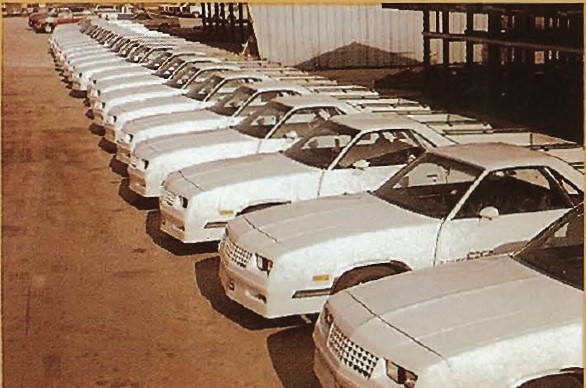
Choo Choo Customs data shows that there were 4,950 of these conversions assembled between 1983 and 1987. What is not known is if those numbers were combined El Camino conversions with other special models they also did such as the pickups and Camaros.
However, according to reported build sequence data that’s been collected over the last few years, roughly 2,700 Choo Choo’s should have been produced using the build sequence numbers for the trucks reported as known or still existing. Somewhere along the way, one with a number higher than 2,700 should have surfaced.
Either way, they remain to be some of the harder to find and collectible models of the El Camino population, and often bring in a few thousand dollars more in estimated resale value.
View the Choo Choo Customs Database of reported sequence numbers here.
But that’s not all there is to these…there’s quite a bit more interesting information on these unique versions.
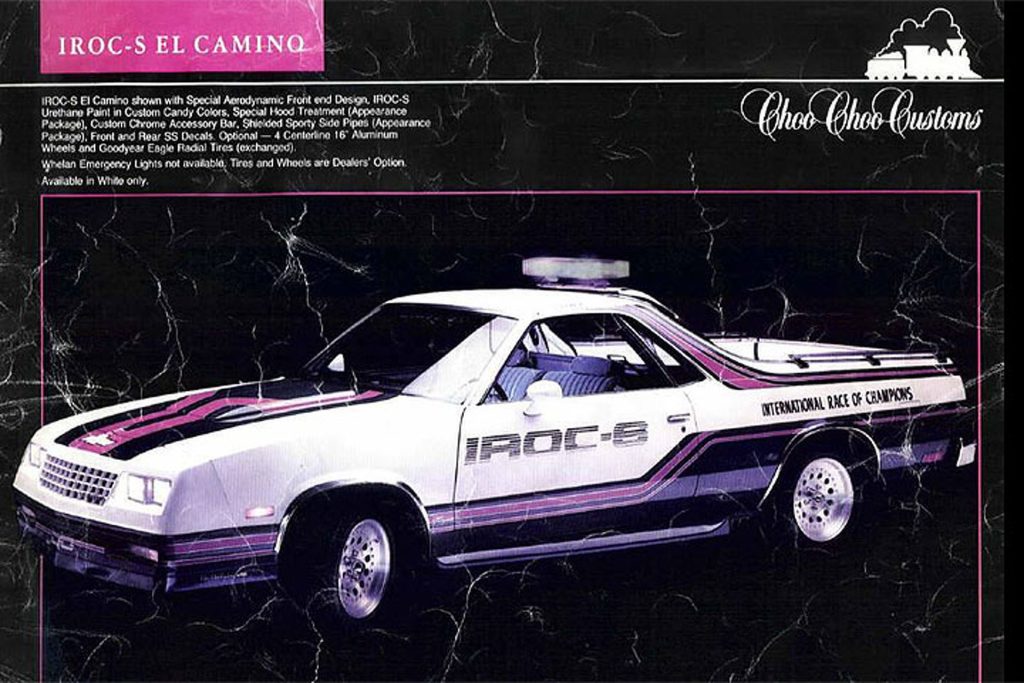
IROC-S Pace Car:
IROC-S Pace Car & Replicas:
These were produced in 1985*-1986. The first 12 were 1985 models while 13-15 were 1986. Supposedly, a handful of Chevrolet dealers sent a few (5) white ’86 model Choo-Choo El Camino’s to CCC to be retrofitted into IROC-S replicas but those were never numbered.
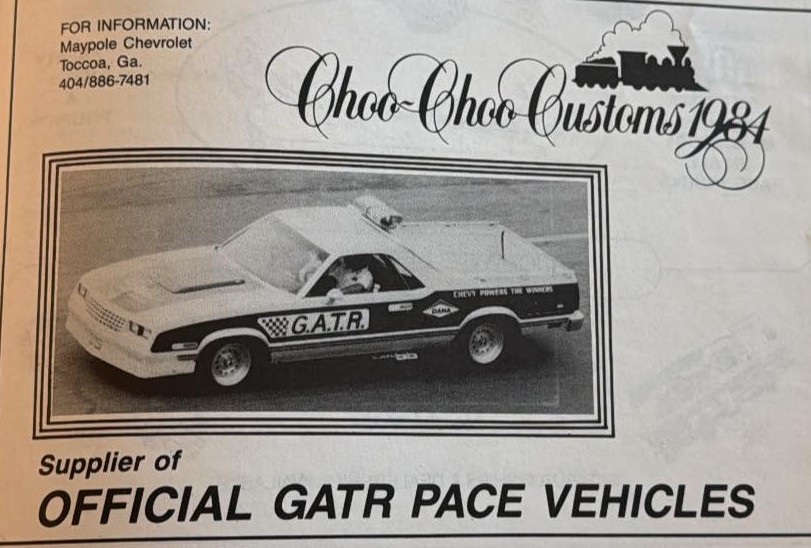
*There is a timeline discrepancy as to when the first/”actual”, track-used pace truck was commissioned, and there are now questions if there were possibly more than one. There are images and video of one used in 1984 as a pace vehicle for the Great American Truck Racing (GATR) circuit, as well as during the 1984 IROC season early on in the year.
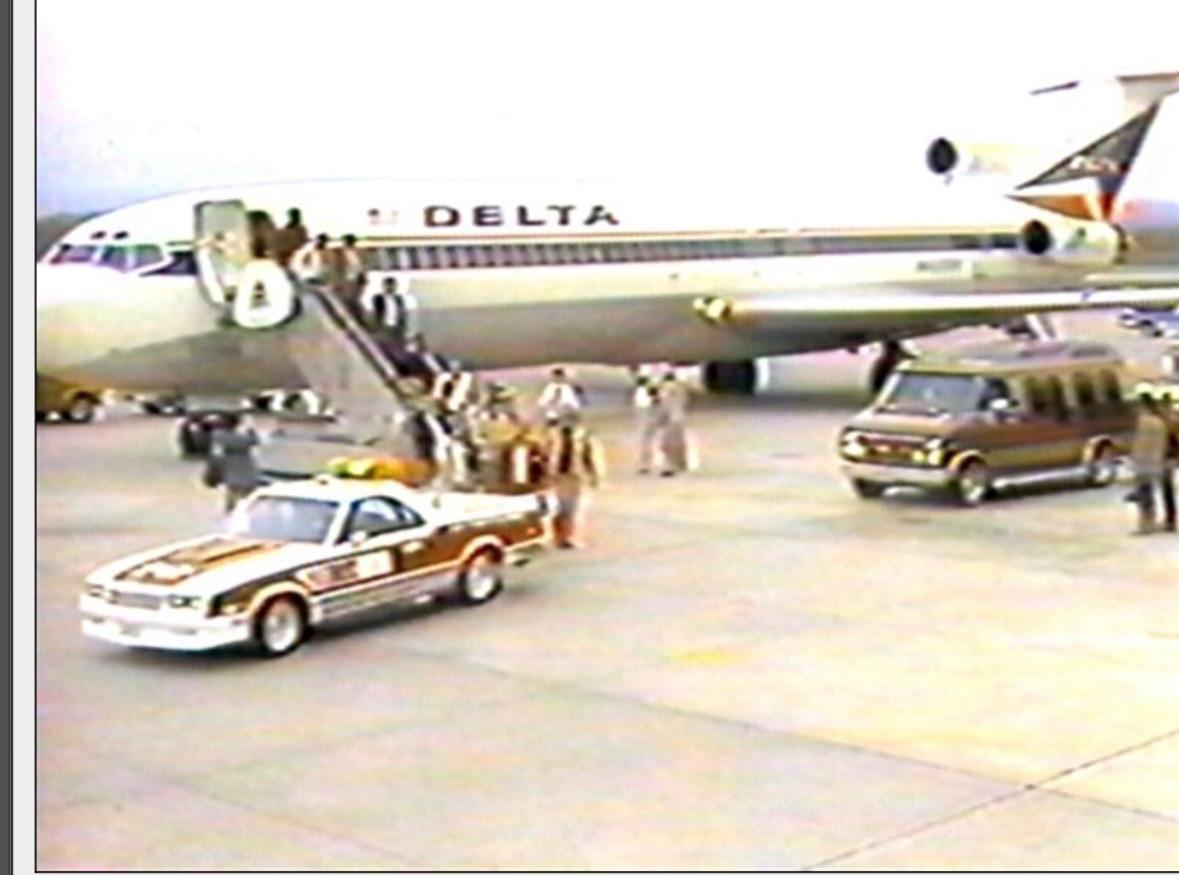
Images suggest one had red graphics and was used at the St. Louis Driveaway event, and the other had dark blue graphics, which is also shown in TV coverage of the IROC races in ’84 and may be the one shown at Daytona also sometime in ’84, likely the July race.
The question is if one of these was possibly repainted to the more current scheme and is the #001 “actually used” ancillary pace truck?
There is also a black and silver version that was used at Michigan Motor Speedway as a track support vehicle in 1986 for 2 NASCAR and 2 CART races, was present during the St. Louis Driveaway event, and was supposedly owned by Penske.
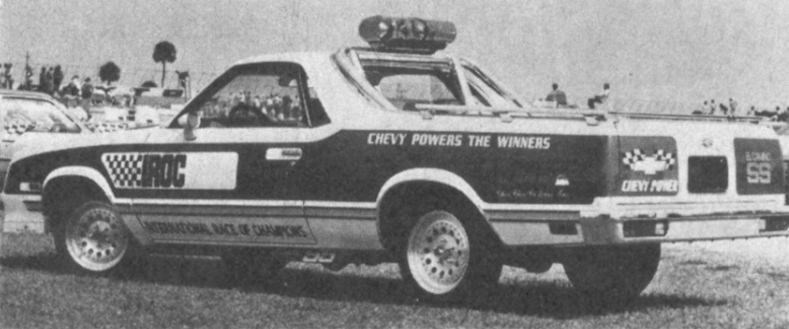
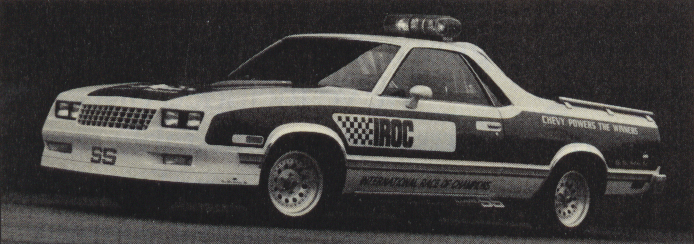
Number 15 was said to be the last IROC-S replica to receive a number plate. In total, former Choo-Choo executives estimate that approximately 19 IROC-S replicas were built, including those 5 retrofits.
Number 001 is an ’85 and is claimed to be the only one actually used as an ancillary pace car. It had a 350 TPI engine, special Goodyear tires and the graphics are all paint while the rest have decals. However, it appears that it’s paint may have been redone at some point as the track-used one’s scheme resembles that of the original GATR layout and there is video evidence of track use in 1984 as early as April, (which is too early to be an ’85). In all available photos, it’s has the updated, candy-stripe scheme as do most of the replicas.
It didn’t have a recertification sticker since it was never meant to be sold. The engine was later removed and installed into a yellow and black Indianapolis Motor Speedway track support Choo Choo, and the original 305 was reinstalled.
14 IROC-S reproductions were made and they were all numbered 1-15. Number 13 has red and blue reversed since number 13 was bad luck. All others are considered clones. Unfortunately, there are several clones out there, most being passed off as authentic.
There is also an ‘84 that was converted by CCC in ’86 and has two recertification labels and is claiming it is number 15, but the true number 15 is actually an ’86 according to other sources.
The whereabouts of numbers 2, 3, 4, 8, 9, 10, 11, & 14 are unknown. The rest, including the non-serialized retrofits were accounted for as of 2010.
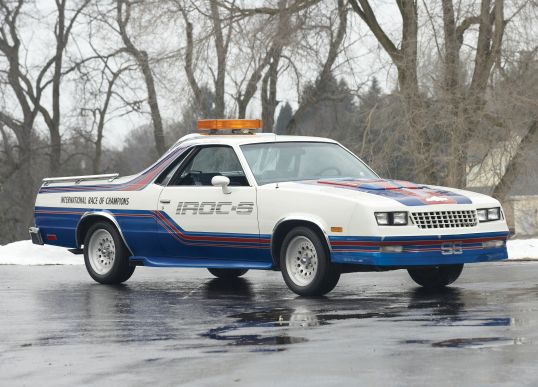
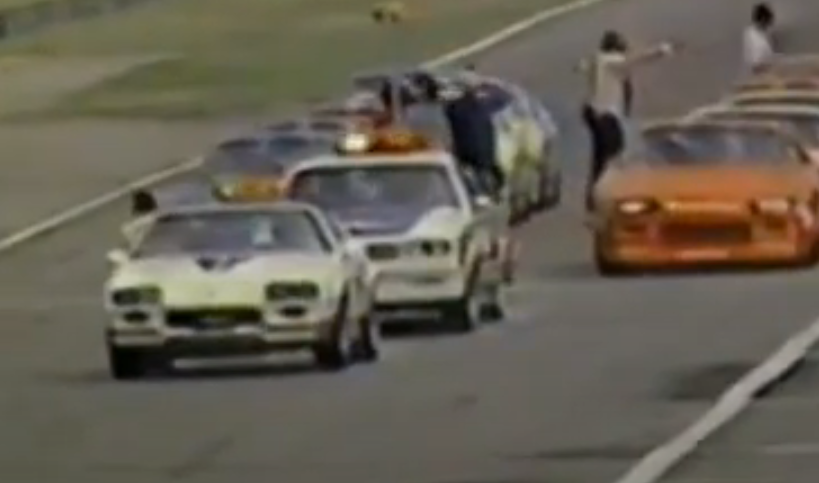
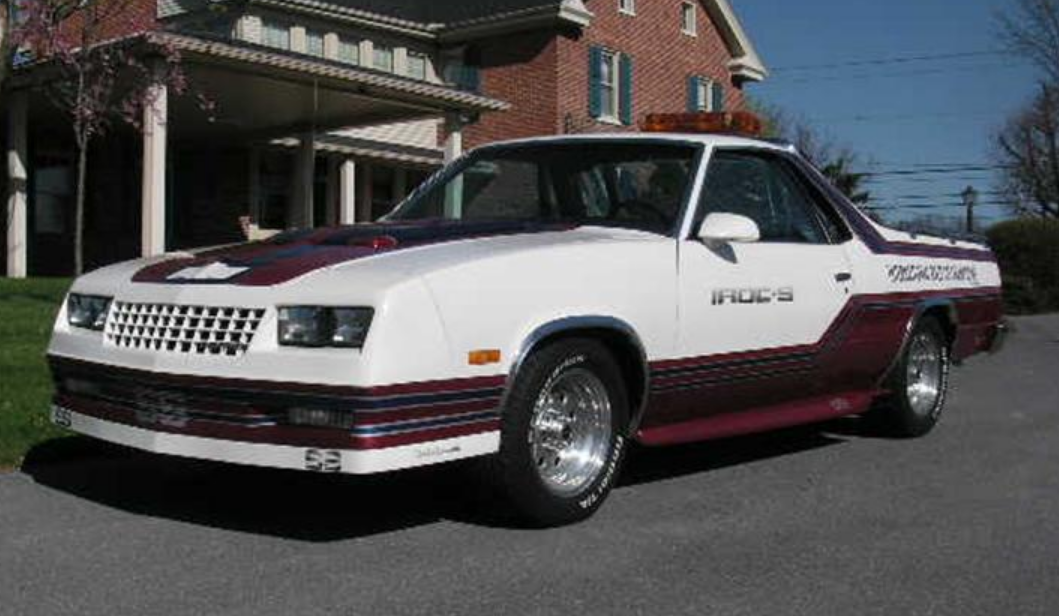
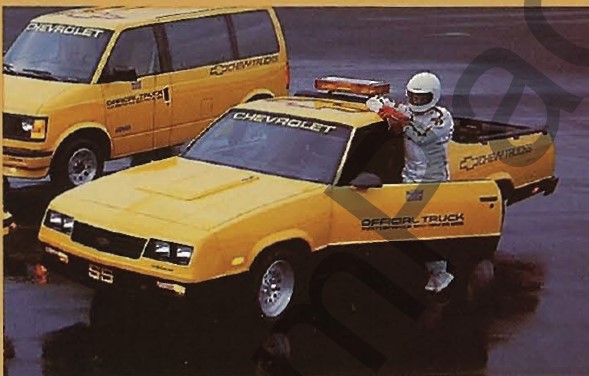
Love them or hate them, next to the 1978 Black Knight they are some of the more rare examples of the 5th Gen El Camino with less than 5000 made over a 5 year period and in many cases, will typically pull quite a few more dollars in resale value compared to the other model variants.